
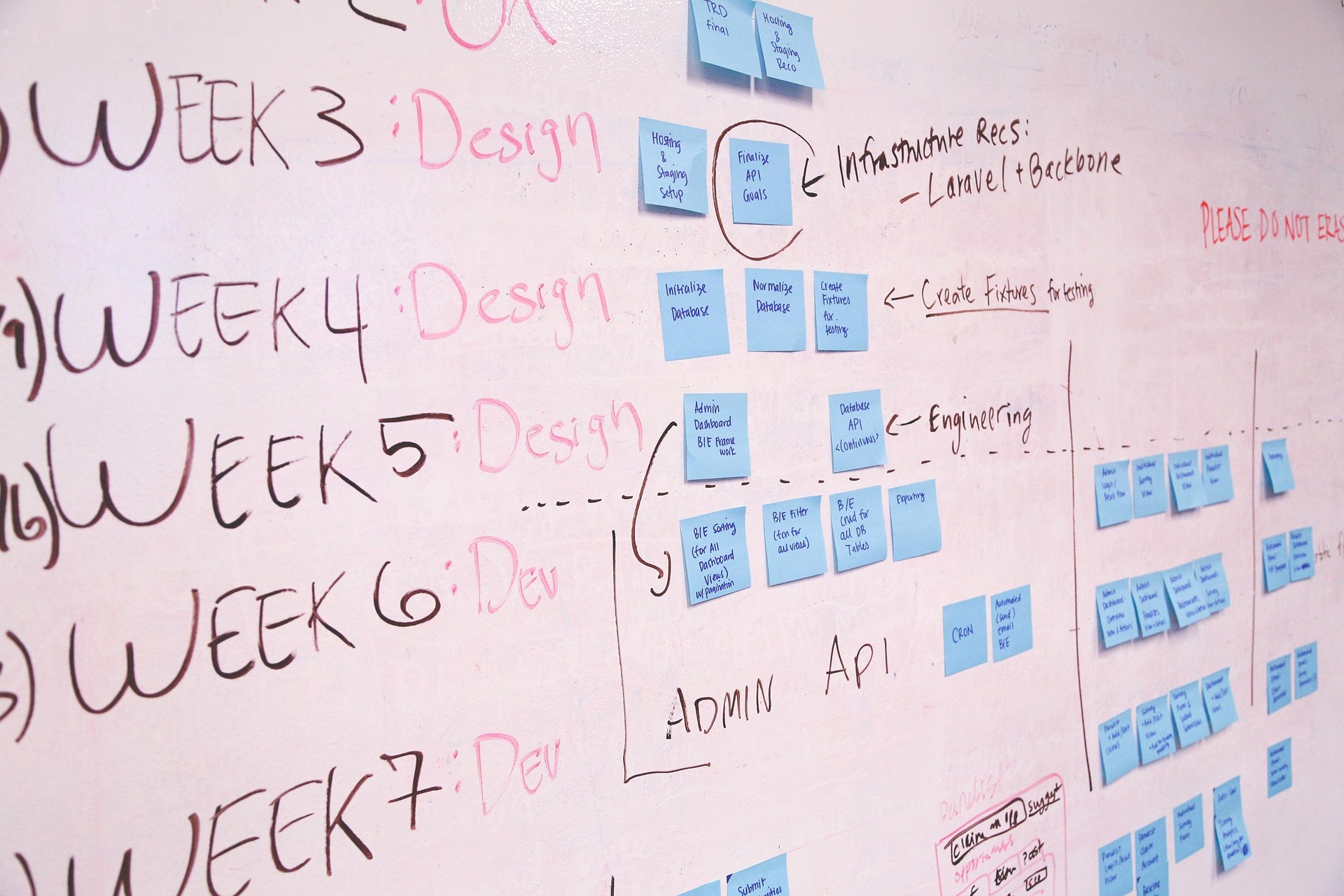

Strategic planning is the process of defining business goals, evaluating current conditions, choosing priorities, and creating a clear plan for long-term success. In business, strategic planning helps leaders make better decisions, improve business strategy, manage risk, allocate resources, and guide teams toward measurable outcomes.
What Is Strategic Planning?
Strategic planning means deciding where a business wants to go and how it will get there. It connects long-term goals with practical decisions about markets, customers, resources, operations, people, and financial priorities.
The strategic planning meaning is often misunderstood. It is not only a document, annual meeting, or presentation. A useful strategic plan helps leaders make choices. It explains what the business will focus on, what it will avoid, how success will be measured, and which resources are needed.
Without strategic planning, businesses often react to problems instead of preparing for them. Teams may work hard but move in different directions. Leaders may chase too many opportunities at once. Budgets may be spent without clear priorities. Decision making becomes slower because there is no shared framework.
A strong strategic planning process helps answer important questions:
- What are the company’s most important goals?
- Which markets or customers should the business prioritize?
- What risks could affect growth?
- What resources are limited?
- Which business strategy gives the company the best chance of success?
- How should leaders make decisions when trade-offs appear?
- What metrics will show whether the plan is working?
Strategic planning gives business leaders a roadmap, but it should remain flexible enough to adjust when market conditions change.
Strategic Planning at a Glance
| Strategic Planning Area | What It Means | Business Impact |
|---|---|---|
| Business goals | Long-term outcomes the company wants to achieve | Creates direction |
| Business strategy | The approach used to compete and grow | Guides priorities |
| Decision making | Choosing between options and trade-offs | Improves execution |
| Data driven decision making | Using evidence instead of assumptions | Reduces guesswork |
| Workforce planning | Aligning people and skills with future needs | Supports growth |
| Procurement planning | Aligning purchasing with business goals | Controls costs |
| Supply chain planning | Preparing suppliers, inventory, and logistics | Reduces disruption |
| Risk assessment | Identifying possible threats | Improves resilience |
| Performance metrics | Measuring progress toward strategy | Creates accountability |
Strategic planning works best when it connects leadership vision with practical execution. A plan that sounds impressive but does not change decisions is not useful.
Strong strategic planning should also support operational efficiency, because business goals only matter when teams can turn priorities into clear processes, better workflows, and measurable execution.
Strategic Planning vs Business Strategy
Strategic planning and business strategy are connected, but they are not the same.
Business strategy describes how a company will compete, grow, and create value. Strategic planning is the process of turning that strategy into goals, actions, resources, timelines, and measurements.
Strategic Planning vs Business Strategy
| Factor | Strategic Planning | Business Strategy |
|---|---|---|
| Main purpose | Organize goals, resources, actions, and timelines | Define how the business will compete and grow |
| Key question | How will we execute the strategy? | What direction should the business take? |
| Time focus | Medium to long term | Long term and competitive positioning |
| Output | Strategic plan, priorities, initiatives, metrics | Strategic direction and competitive choices |
| Best use | Aligning teams and resources | Choosing markets, offers, and positioning |
A business can have strategy without planning, but execution may become weak. A business can also have planning without strategy, but the plan may become a list of tasks without a clear competitive purpose.
The best companies connect both.
What Is Business Strategy?
Business strategy is the plan a company uses to create value, compete in the market, attract customers, and reach long-term goals. It explains what the business will do differently or better than competitors.
A business strategy may focus on:
- lower costs;
- better customer experience;
- niche specialization;
- premium positioning;
- faster delivery;
- stronger service;
- product innovation;
- geographic expansion;
- operational efficiency;
- customer retention.
For small businesses, business strategy does not need to be complicated. It should be clear enough that the owner, managers, and employees understand what matters most.
Business Level Strategy
Business level strategy focuses on how a company competes in a specific market. It is different from corporate strategy, which may involve multiple business units or industries.
Common Business Level Strategy Types
| Strategy Type | What It Means | Example |
|---|---|---|
| Cost leadership | Compete through lower costs | Efficient operations and competitive pricing |
| Differentiation | Compete through unique value | Better service, quality, expertise, or brand |
| Focus strategy | Serve a specific niche | Specialized services for a narrow customer group |
| Customer experience strategy | Win through superior experience | Faster support, personalization, loyalty |
| Innovation strategy | Compete through new solutions | New products, technology, or delivery models |
A small business should choose a business level strategy that matches its strengths. Trying to be the cheapest, fastest, highest quality, and most innovative at the same time usually creates confusion.
Why Strategic Planning Matters for Leaders
Strategic planning matters because leaders must make decisions with limited resources. Time, money, people, attention, and capacity are never unlimited. Strategic planning helps leaders decide what deserves focus.
A leader without a strategic plan may say yes to too many ideas. This can create scattered work, confused teams, and weak execution. A leader with a clear strategic plan can say no more confidently because the business has defined priorities.
Strategic planning helps leaders:
- align teams around shared goals;
- improve decision making;
- control costs;
- prepare for risks;
- allocate resources;
- measure progress;
- strengthen business performance;
- avoid reactive management;
- plan hiring and workforce needs;
- connect daily operations to long-term goals.
Strategic planning is not only for large corporations. Small businesses also need direction. In fact, small businesses often need strategy even more because mistakes can be expensive and resources are limited.
Decision Making in Strategic Planning
Decision making is at the center of strategic planning. A strategic plan requires leaders to choose between options: which customers to serve, which products to develop, which costs to cut, which markets to enter, which people to hire, and which risks to accept.
Decision making in management means selecting a course of action based on goals, information, constraints, and expected outcomes. Good decisions are not always perfect, but they should be clear, reasoned, and connected to business priorities.
Decision Making Process
| Step | Action | Purpose |
|---|---|---|
| 1 | Define the decision | Clarifies the problem or opportunity |
| 2 | Gather information | Reduces uncertainty |
| 3 | Identify options | Creates alternatives |
| 4 | Evaluate trade-offs | Compares risks, costs, and benefits |
| 5 | Choose a direction | Creates commitment |
| 6 | Communicate the decision | Aligns the team |
| 7 | Execute the plan | Turns choice into action |
| 8 | Review results | Improves future decisions |
A decision making process helps leaders avoid emotional or rushed choices. It also creates a repeatable structure for important business decisions.
What Is Decision-Making in Management?
Decision-making in management is the process managers use to choose actions that affect people, resources, operations, customers, and business results. It can involve daily operational choices or major strategic decisions.
Management decisions may include:
- hiring employees;
- changing pricing;
- selecting vendors;
- entering a new market;
- launching a product;
- cutting costs;
- investing in software;
- changing workflows;
- expanding internationally;
- adjusting business strategy.
The quality of management decisions affects business performance. Poor decisions can waste money, damage morale, weaken customer experience, or slow growth. Strong decisions can improve efficiency, profitability, culture, and competitive position.
Strategic Decision Making
Strategic decision making focuses on major choices that affect the long-term direction of the business. These decisions are usually more complex than routine operational decisions because they involve uncertainty, risk, and trade-offs.
Strategic vs Operational Decisions
| Factor | Strategic Decisions | Operational Decisions |
|---|---|---|
| Time horizon | Long term | Short term |
| Impact | High business impact | Daily execution impact |
| Examples | Market entry, business model, major investment | Scheduling, task assignment, routine purchasing |
| Risk level | Usually higher | Usually lower |
| Data needed | Market, financial, customer, operational data | Process and workflow data |
| Review frequency | Periodic | Daily or weekly |
A leader should not treat every decision as strategic. If everything is strategic, nothing is strategic. The most important decisions deserve deeper analysis.
Data Driven Decision Making
Data driven decision making means using evidence, metrics, customer insights, financial information, and operational data to guide business choices. It does not mean ignoring judgment. It means improving judgment with better information.
Data driven decision making can help leaders avoid assumptions such as:
- “Customers probably want this.”
- “This product seems profitable.”
- “This marketing channel should work.”
- “We need to hire immediately.”
- “This supplier is the cheapest option.”
- “Expansion will automatically increase profit.”
Instead, leaders can examine real data:
- customer retention;
- sales trends;
- profit margins;
- cost changes;
- campaign performance;
- productivity metrics;
- customer feedback;
- cash flow forecasts;
- market research;
- supplier performance.
Data Driven Decision Making Table
| Business Decision | Useful Data |
|---|---|
| Launch a new product | Customer interviews, pre-orders, competitor demand |
| Increase prices | Margin data, customer feedback, competitor pricing |
| Enter a new market | Market size, local competition, demand signals |
| Hire employees | Workload data, revenue forecast, productivity metrics |
| Cut costs | Expense reports, profitability analysis, value impact |
| Change suppliers | Cost, quality, delivery time, reliability |
| Expand internationally | Demand, legal risk, logistics, local market data |
Data reduces uncertainty, but it does not remove responsibility. Leaders still need judgment because data can be incomplete, outdated, or misinterpreted.
How to Improve Decision-Making in Management
Leaders can improve decision-making in management by using a structured process, gathering relevant data, involving the right people, identifying trade-offs, and reviewing outcomes after implementation.
Decision Improvement Framework
| Improvement Area | Practical Action |
|---|---|
| Clarify the decision | Write the decision in one sentence |
| Define success | Decide what outcome would make the decision successful |
| Use relevant data | Gather financial, customer, and operational evidence |
| Avoid too many options | Compare realistic alternatives |
| Identify trade-offs | Understand what the business gives up |
| Assign ownership | Make one person responsible for execution |
| Set review points | Check whether the decision worked |
| Learn from results | Improve future decisions |
A strong decision process does not guarantee a perfect result. It improves the chances of making a useful decision and learning from the outcome.
Informed Business Decisions
Informed business decisions are choices based on relevant information, strategic priorities, and realistic assessment of risk. They are different from decisions based only on instinct or pressure.
An informed decision should answer:
- What problem are we solving?
- What goal does this support?
- What information do we have?
- What information is missing?
- What are the options?
- What are the risks?
- What is the expected return?
- Who owns execution?
- How will we measure success?
Informed business decisions are especially important in uncertain markets. When conditions change quickly, leaders need clear decision criteria instead of reacting emotionally to every new challenge.
Strategic Workforce Planning
Strategic workforce planning means aligning people, skills, roles, and hiring plans with long-term business strategy. It helps leaders decide what talent the company will need in the future.
A business may have a strong strategy, but if it lacks the right people, the plan may fail. Workforce planning helps connect strategy with human capacity.
Strategic Workforce Planning Table
| Workforce Question | Why It Matters |
|---|---|
| What skills will the business need? | Supports future capability |
| Which roles are critical? | Protects execution |
| Are current employees ready for future needs? | Identifies training gaps |
| Where are capacity limits? | Prevents overload |
| What hiring is needed? | Supports growth planning |
| What can be outsourced? | Controls costs |
| Which employees could become future leaders? | Supports leadership development |
Strategic workforce planning is important for small businesses because hiring too early can pressure cash flow, while hiring too late can damage service quality and growth.
Procurement Strategic Planning
Procurement strategic planning means aligning purchasing decisions with business goals. It helps a company decide which suppliers to use, how to manage costs, how to reduce risk, and how purchasing supports long-term strategy.
Procurement should not be treated only as buying things cheaply. Poor procurement decisions can create delays, quality problems, supplier dependency, and hidden costs.
Procurement Strategic Planning Areas
| Procurement Area | Strategic Question |
|---|---|
| Supplier selection | Which suppliers support quality, cost, and reliability? |
| Cost control | Where can purchasing costs be reduced without harming value? |
| Contract management | Are renewal terms and obligations clear? |
| Vendor risk | What happens if a key supplier fails? |
| Purchasing process | Are approvals and responsibilities clear? |
| Spend analysis | Where is the business spending the most? |
| Supplier relationships | Which vendors are strategic partners? |
Procurement strategic planning connects well with operational efficiency. A business that buys better can often operate better.
Supply Chain Strategic Planning
Supply chain strategic planning helps businesses prepare for supplier, inventory, logistics, and delivery risks. It is especially important for companies that rely on products, materials, shipping, manufacturing, or multiple vendors.
Supply chain planning can affect customer experience, cash flow, profitability, and growth. If the supply chain is weak, even strong sales can become difficult to fulfill.
Supply Chain Strategic Planning Table
| Supply Chain Area | Risk | Strategic Response |
|---|---|---|
| Supplier dependency | Too much reliance on one vendor | Identify backup suppliers |
| Inventory planning | Too much or too little stock | Improve demand forecasting |
| Shipping delays | Customers receive products late | Review logistics partners |
| Cost increases | Margins decline | Negotiate terms or adjust pricing |
| Quality issues | Returns or complaints rise | Add supplier performance reviews |
| Global disruption | Supply becomes unreliable | Diversify sourcing where possible |
Supply chain strategic planning is not only for large companies. Small businesses also need supplier and inventory resilience.
International Business Expansion Strategy
International business expansion strategy involves planning how a company will enter and grow in foreign markets. This can include exporting, partnerships, local hiring, international ecommerce, licensing, or opening operations in another country.
International expansion can create growth, but it also increases complexity.
International Expansion Planning Questions
| Question | Why It Matters |
|---|---|
| Is there real demand in the target market? | Reduces market entry risk |
| What local competitors exist? | Helps define positioning |
| What regulations apply? | Avoids compliance problems |
| How will pricing change? | Accounts for currency, taxes, logistics |
| What customer behavior is different? | Improves marketing and sales |
| What partnerships are needed? | Supports local execution |
| What risks could affect operations? | Improves planning |
International business expansion strategy should be based on evidence, not only ambition. A business should test demand before committing major resources.
Business Strategy and the Environment
Business strategy and the environment are connected because companies do not operate in isolation. Economic conditions, customer expectations, technology, regulations, competitors, labor markets, and supply chains all affect strategic planning.
A business strategy that works in one environment may fail in another. Leaders should review external conditions regularly.
External Environment Factors
| Factor | Strategic Impact |
|---|---|
| Economic conditions | Affects demand, costs, and financing |
| Technology | Creates opportunities and threats |
| Regulation | Changes compliance requirements |
| Customer behavior | Influences products and marketing |
| Competition | Affects pricing and positioning |
| Labor market | Impacts hiring and wages |
| Supply chain | Affects cost and availability |
| Global events | May create disruption or opportunity |
Strategic planning should include environmental scanning. This helps leaders adapt instead of assuming the market will remain the same.
Practical Strategic Planning Framework
A simple strategic planning framework can help small businesses and leaders organize decisions.
The STRATEGY Framework
| Step | Meaning | Key Question |
|---|---|---|
| S | Situation | Where are we now? |
| T | Targets | What do we want to achieve? |
| R | Resources | What people, money, and tools do we have? |
| A | Alternatives | What options are available? |
| T | Trade-offs | What must we choose or avoid? |
| E | Execution | Who will do what and by when? |
| G | Governance | How will we review progress? |
| Y | Yield | What results will show success? |
This framework keeps strategic planning practical. It avoids vague goals and forces leaders to connect planning with execution.
Strategic Planning Process
| Planning Step | Action | Output |
|---|---|---|
| 1 | Review current business performance | Situation analysis |
| 2 | Define long-term goals | Strategic targets |
| 3 | Analyze market and environment | Opportunity and risk view |
| 4 | Choose strategic priorities | Focus areas |
| 5 | Create initiatives | Projects and actions |
| 6 | Assign owners | Accountability |
| 7 | Set metrics | Measurement system |
| 8 | Review and adjust | Continuous improvement |
A strategic plan should not sit unused. It should guide meetings, budgets, hiring, marketing, operations, and performance reviews.
Common Strategic Planning Mistakes
Mistake 1: Creating a plan without making choices
A strategic plan should define priorities. If it includes everything, it does not guide decision making.
Mistake 2: Ignoring data
Leaders should not rely only on opinion. Data driven decision making helps reduce guesswork.
Mistake 3: Separating strategy from budgets
A strategy without resources is only a wish. Budgets should support strategic priorities.
Mistake 4: Failing to involve managers
Managers turn strategy into execution. If they do not understand the plan, implementation will suffer.
Mistake 5: Not reviewing the plan
Market conditions change. A strategic plan should be reviewed regularly.
Mistake 6: Treating strategic planning as a document
The real value of strategic planning is better decisions and better execution.
Expert Insight: Strategy Is Mostly About Trade-Offs
Many leaders think strategic planning is about creating ambitious goals. Goals matter, but strategy is mostly about trade-offs.
A business cannot serve every customer, enter every market, hire every role, launch every product, and invest in every opportunity at the same time. Strategic planning helps leaders decide what matters most.
The strongest strategies are not always the most complex. They are the clearest. A good strategy helps the business say yes to the right opportunities and no to distractions.
This is why decision making is inseparable from strategic planning. Every strategic plan eventually becomes a series of decisions about money, people, time, customers, and risk.
FAQ
What is strategic planning?
Strategic planning is the process of defining long-term goals, evaluating current conditions, choosing priorities, and creating a plan for execution. It helps businesses align resources and decisions with future success.
What is strategic planning meaning in business?
Strategic planning meaning in business refers to the structured process leaders use to set direction, choose priorities, allocate resources, and guide decision making toward business goals.
What is business strategy?
Business strategy is the approach a company uses to compete, create value, attract customers, and reach long-term goals. It defines where the business will focus and how it will win.
What is business level strategy?
Business level strategy explains how a company competes in a specific market. It may focus on cost leadership, differentiation, niche focus, customer experience, or innovation.
What is decision making?
Decision making is the process of choosing between options. In business, decision making affects strategy, operations, resources, customers, employees, and financial performance.
What is the decision making process?
The decision making process usually includes defining the problem, gathering information, identifying options, evaluating trade-offs, choosing a direction, executing the decision, and reviewing results.
What is data driven decision making?
Data driven decision making means using evidence, metrics, customer insights, financial information, and operational data to guide business choices instead of relying only on assumptions.
What is decision-making in management?
Decision-making in management is the process managers use to choose actions that affect business operations, employees, resources, customers, and results.
How can leaders improve decision-making in management?
Leaders can improve decision-making in management by clarifying goals, using relevant data, comparing realistic options, identifying risks, assigning ownership, and reviewing outcomes after execution.
What is strategic decision making?
Strategic decision making involves major long-term choices that affect business direction, competitive position, investment, market entry, growth, and risk.
What is strategic workforce planning?
Strategic workforce planning is the process of aligning people, skills, roles, and hiring needs with long-term business strategy.
What is procurement strategic planning?
Procurement strategic planning means aligning purchasing, supplier selection, cost control, and vendor management with business goals.
What is supply chain strategic planning?
Supply chain strategic planning means preparing suppliers, inventory, logistics, and delivery systems to support business goals and reduce disruption risk.
Conclusion
Strategic planning helps businesses define direction, improve decision making, build stronger business strategies, and prepare for long-term growth. It connects leadership goals with practical choices about people, money, markets, operations, procurement, supply chains, and risk.
A strong strategic plan is not only a document. It is a decision framework. It helps leaders choose priorities, allocate resources, evaluate trade-offs, and guide teams toward measurable outcomes.
Business strategy, decision making, data analysis, workforce planning, procurement planning, and supply chain planning all become stronger when they are connected through a clear strategic planning process. For business leaders, strategic planning is one of the most important tools for turning ambition into disciplined action.